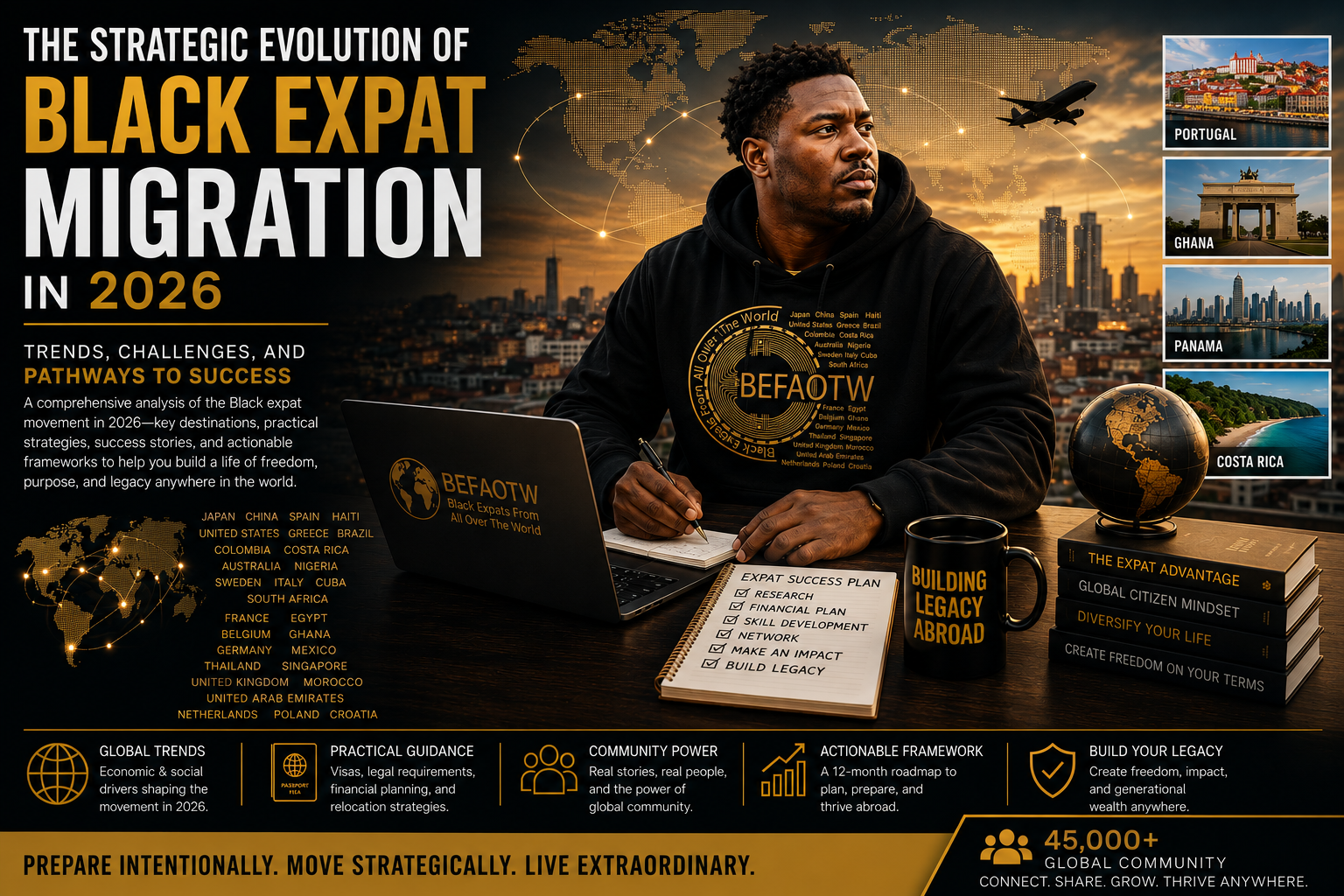
The landscape of Black expat migration continues to evolve significantly as we progress through 2026. What began as a movement driven largely by immediate economic and social pressures has developed into a more sophisticated, strategic pursuit of opportunity, stability, and enhanced quality of life. With over 45,000 members across the BEFAOTW community platforms, clear patterns and insights have emerged regarding destination preferences, successful relocation strategies, and long-term outcomes.
This comprehensive analysis examines the current state of Black expat migration, key destination countries, practical frameworks for success, emerging challenges, and forward-looking considerations for individuals and families evaluating international relocation in the latter half of 2026.
Current Economic and Social Context
Economic indicators in the United States continue to influence relocation decisions. Black unemployment rates have remained elevated compared to national averages throughout 2026, with additional pressures from housing affordability, healthcare costs, and shifting employment landscapes. These factors, combined with aspirations for improved personal safety, educational opportunities, cultural alignment, and work-life balance, have sustained strong interest in international mobility.
Community discussions within dedicated expat networks reflect a maturation of the movement. Rather than reactive decisions, many participants are now engaging in systematic research, financial planning, and skills development prior to relocation.
Leading Destination Countries in Late 2026
Portugal Portugal maintains its position as one of the most popular destinations. The D7 Passive Income Visa and Golden Visa pathways continue to attract professionals and entrepreneurs. Lisbon and Porto offer strong infrastructure, quality healthcare, and established Black expat communities. Monthly living costs for a single professional typically range between $1,800 and $2,800.
Ghana Ghana remains a meaningful choice due to cultural and ancestral connections. Government policies supporting the African diaspora, including Right of Abode provisions, continue to facilitate relocation. Living expenses in Accra generally fall between $800 and $1,800 per month, with growing opportunities in entrepreneurship, agriculture, and technology sectors.
Panama Panama is valued for its modern infrastructure, proximity to the United States, and business-friendly environment. The Friendly Nations Visa and Pensionado programs provide accessible pathways. Monthly costs typically range from $1,500 to $2,500, with strong appeal for remote professionals and families.
Costa Rica Costa Rica continues to rank highly for safety, natural environment, and wellness-focused lifestyles. The country’s residency programs and high quality of healthcare make it particularly attractive for families and long-term settlers.
Additional Prominent Destinations
- Spain: Offers European Union access and vibrant cultural environments.
- Greece: Known for quality of life and favorable climate.
- Mexico: Provides cultural familiarity and established communities.
- Rwanda, South Africa, Thailand, Colombia, and Malaysia: Each presents unique advantages depending on individual career objectives and lifestyle preferences.
Strategic Framework for Successful Relocation
Effective relocation in 2026 requires structured preparation across multiple domains:
Financial Preparation Building a minimum 6–12 month financial runway is widely recommended. Diversifying income through remote work, digital businesses, consulting, coaching, and content creation has proven effective for many community members.
Visa and Legal Navigation Understanding specific visa requirements, documentation processes, tax obligations (including FATCA compliance), and healthcare arrangements is essential. Professional consultation in these areas is advisable.
Cultural and Social Integration Successful transitions often involve language study, cultural education, and proactive engagement with local and expat communities. Initial adjustment periods of 3–6 months are common.
Professional and Skill Development Portable skills in areas such as digital marketing, education (TESOL), coaching, strength and conditioning, and entrepreneurship significantly enhance adaptability and earning potential abroad.
Community Insights and Success Patterns
Analysis of BEFAOTW community experiences reveals several common success factors:
- Thorough pre-relocation research and trial visits
- Development of multiple income streams
- Strong support networks before and after moving
- Focus on long-term legacy building rather than short-term escape
Numerous members have successfully transitioned into remote businesses, international education roles, consulting practices, and entrepreneurial ventures while establishing stable lives overseas.
Challenges and Risk Mitigation
Common challenges include bureaucratic processes, cultural adjustment, initial loneliness, and fluctuating exchange rates. Proactive planning, community engagement, and phased approaches (such as extended trial periods) help reduce these risks.
Long-Term Considerations for 2026 and Beyond
As the movement matures, increasing attention is being paid to citizenship pathways, family planning, educational opportunities for children, retirement planning, and sustainable wealth building in new environments.
Conclusion Black expat migration in late 2026 reflects a strategic pursuit of expanded opportunities and improved quality of life. Through careful planning and community support, many individuals and families are achieving meaningful success in their international journeys.
For additional resources, destination guides, and community engagement, visit befaotw.com.