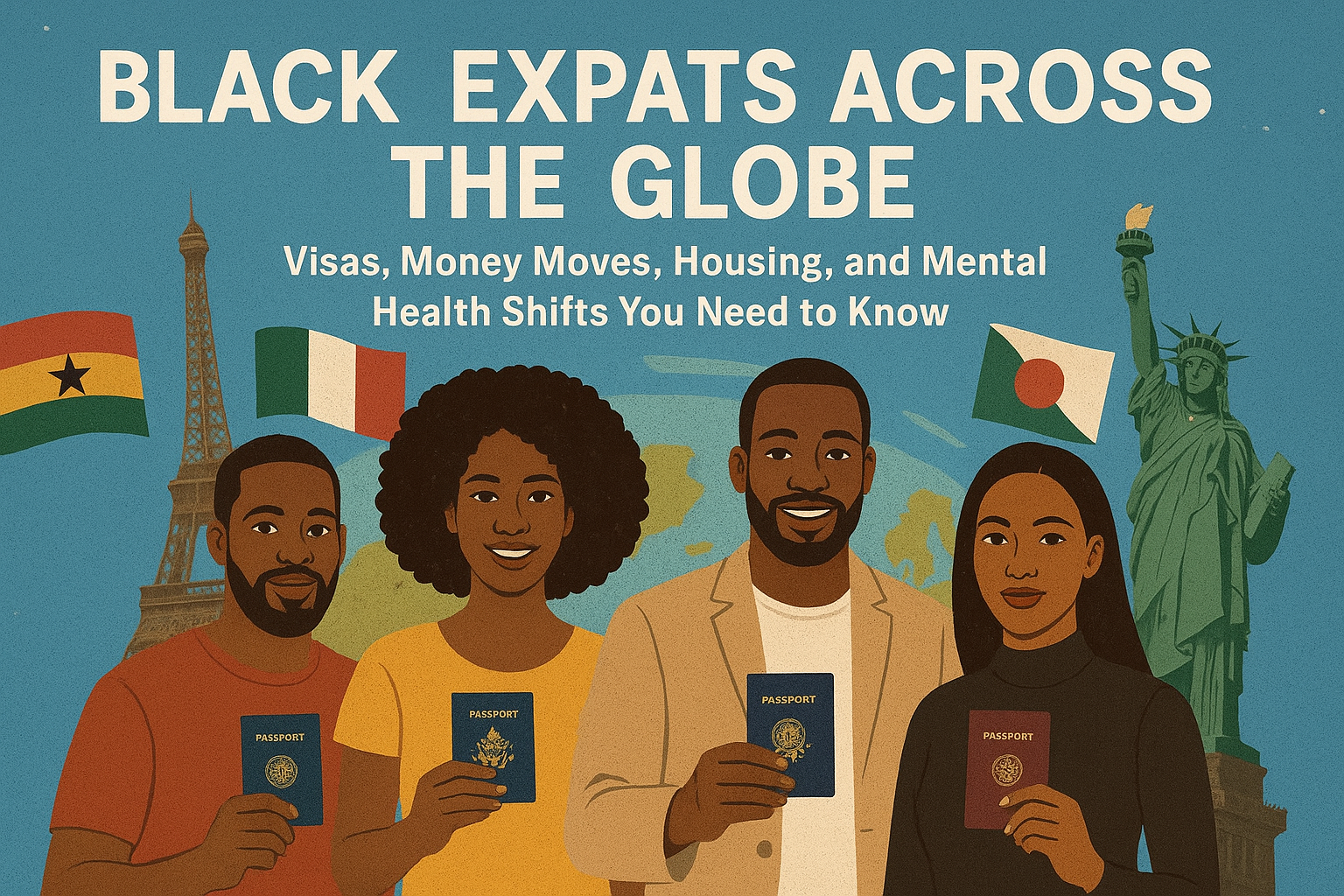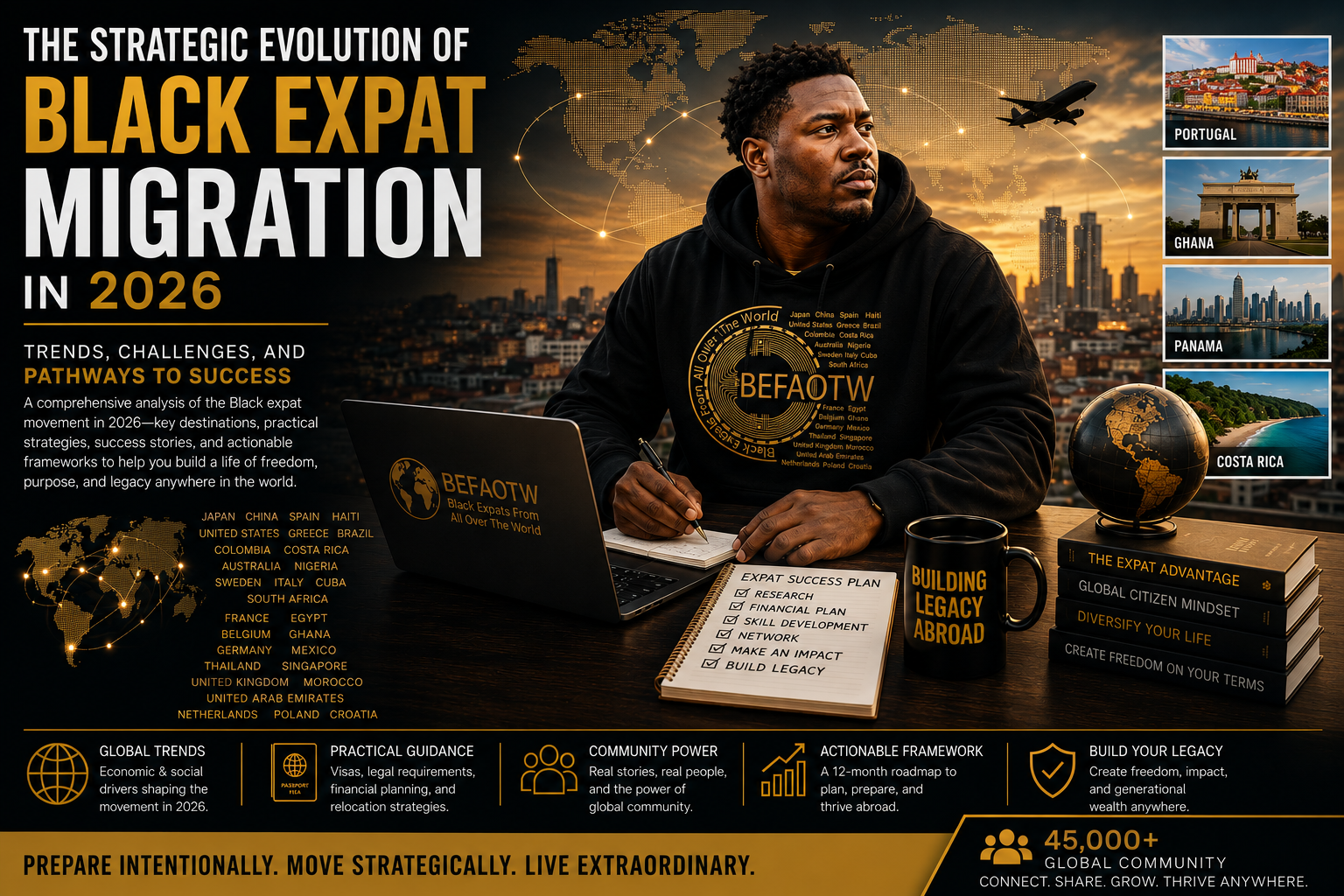
Over the past few years, living abroad has shifted from being a lifestyle choice to becoming a global movement — and in 2026, Black expats are increasingly at the center of that transformation.
What once required corporate relocation packages or retirement planning can now be achieved through remote work, digital entrepreneurship, and evolving immigration policies. Today, mobility is no longer reserved for a select few. It is becoming a strategic decision for professionals, creatives, athletes, and families seeking opportunity, stability, and quality of life beyond their home countries.
And the data shows this shift is accelerating.
A Global Migration Reset
International mobility is reaching historic levels. Across Europe alone, nearly 29 million foreign citizens now hold residency, reflecting rapid growth in cross-border living and work opportunities.
At the same time, more than 40 countries now offer digital nomad or remote work visas, a number that continues to expand as governments compete for global talent and foreign income earners.
This policy evolution is changing the traditional expat model. Instead of moving abroad permanently through employment sponsorship, many Black professionals are relocating independently — bringing their careers with them.
The result: mobility is becoming decentralized and self-directed.
Why Black Expats Are Moving Differently
While economic opportunity remains a major motivator, today’s Black expat movement is shaped by a broader set of factors:
- Desire for improved work-life balance
- Lower cost of living and healthcare access
- Entrepreneurial freedom
- Cultural belonging and identity exploration
- Remote income flexibility
Recent analyses show growing migration from Black Americans and diaspora communities toward regions such as Africa, Southern Europe, and the Caribbean — driven by both “push factors” like social stress and “pull factors” including property ownership opportunities and community connection.
For many, relocation is not about escape — it’s about alignment.
The Digital Nomad Revolution Meets the Diaspora
The biggest catalyst behind this shift is remote work.
Digital nomad visas now commonly allow stays of one to three years, often with pathways toward long-term residency or citizenship in countries like Portugal and Spain.
Income requirements vary widely, with some destinations requiring as little as $750–$2,000 monthly income — making relocation accessible to freelancers, coaches, creators, and remote employees alike.
This accessibility has created something new:
location-independent diaspora communities.
Black expats today are no longer isolated individuals abroad — they are building networks, businesses, podcasts, and digital communities that transcend borders.
Africa’s Rising Role in the Expat Conversation
One of the most notable developments is renewed migration interest toward African nations.
Countries like Ghana gained global attention through initiatives inviting diaspora return, while investment, remote work, and entrepreneurship opportunities continue to grow.
Financially, the diaspora’s influence is already massive. Remittances sent back to African countries are projected to exceed $100 billion, transforming diaspora communities into major economic drivers rather than passive observers.
This marks a powerful shift: the diaspora is increasingly shaping global economies — not just participating in them.
The Future of Black Expat Living
Looking ahead, experts predict global mobility will continue expanding as countries face aging populations and labor shortages while younger professionals prioritize flexibility and lifestyle design.
For Black expats, this creates a unique moment in history.
Never before have so many tools existed simultaneously:
- Remote income opportunities
- Accessible visas
- Global online communities
- Cultural reconnection pathways
- Entrepreneurial independence
The question is no longer whether living abroad is possible.
The question is how intentionally people choose to design their global lives.
Final Thought: From Movement to Legacy
The modern Black expat experience is evolving beyond travel or relocation. It is becoming a form of global positioning — economically, culturally, and generationally.
As more members of the diaspora build businesses, families, and communities across continents, they are redefining what success looks like in a connected world.
In many ways, 2026 may be remembered as the moment when Black expatriation stopped being a trend — and became a global legacy.