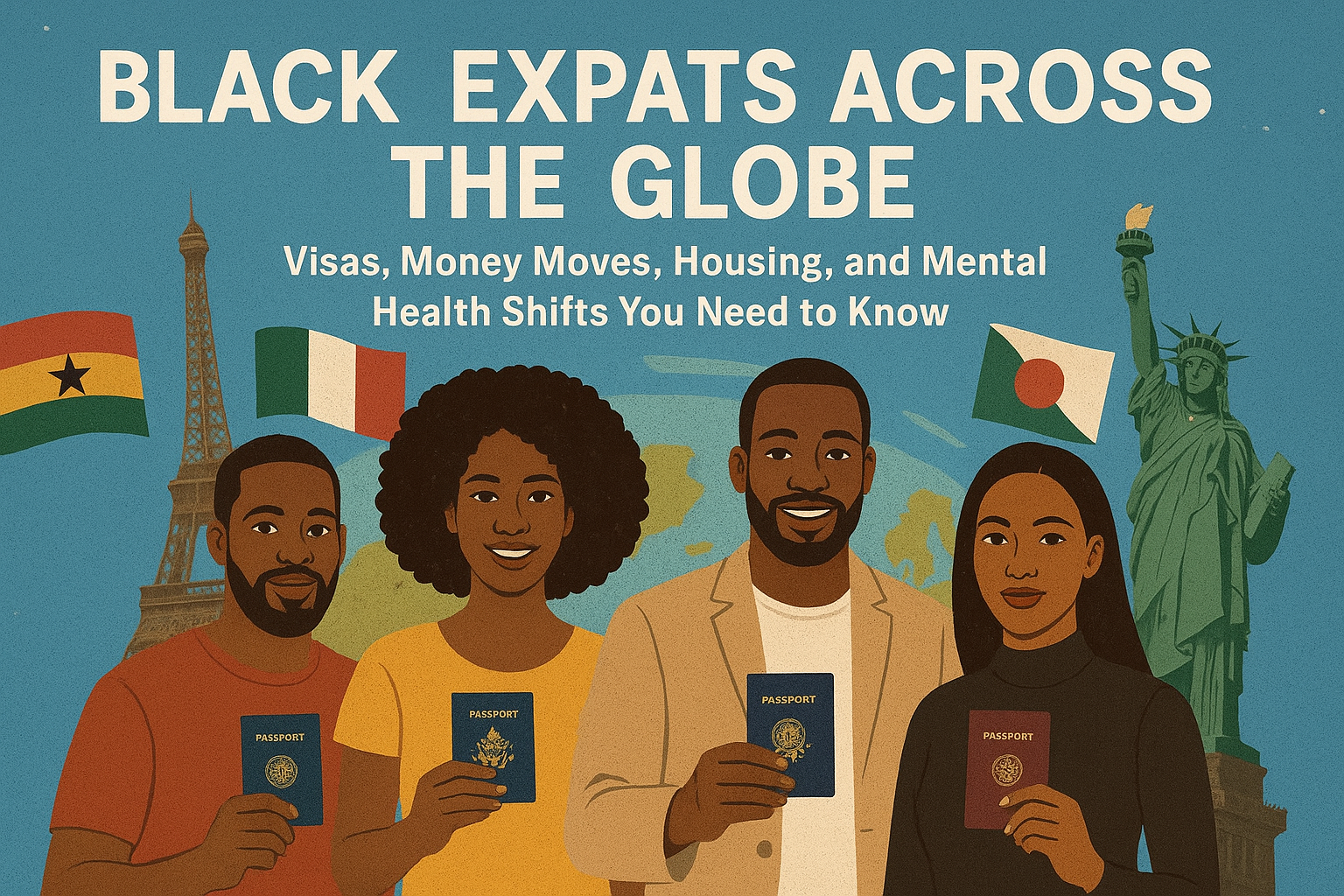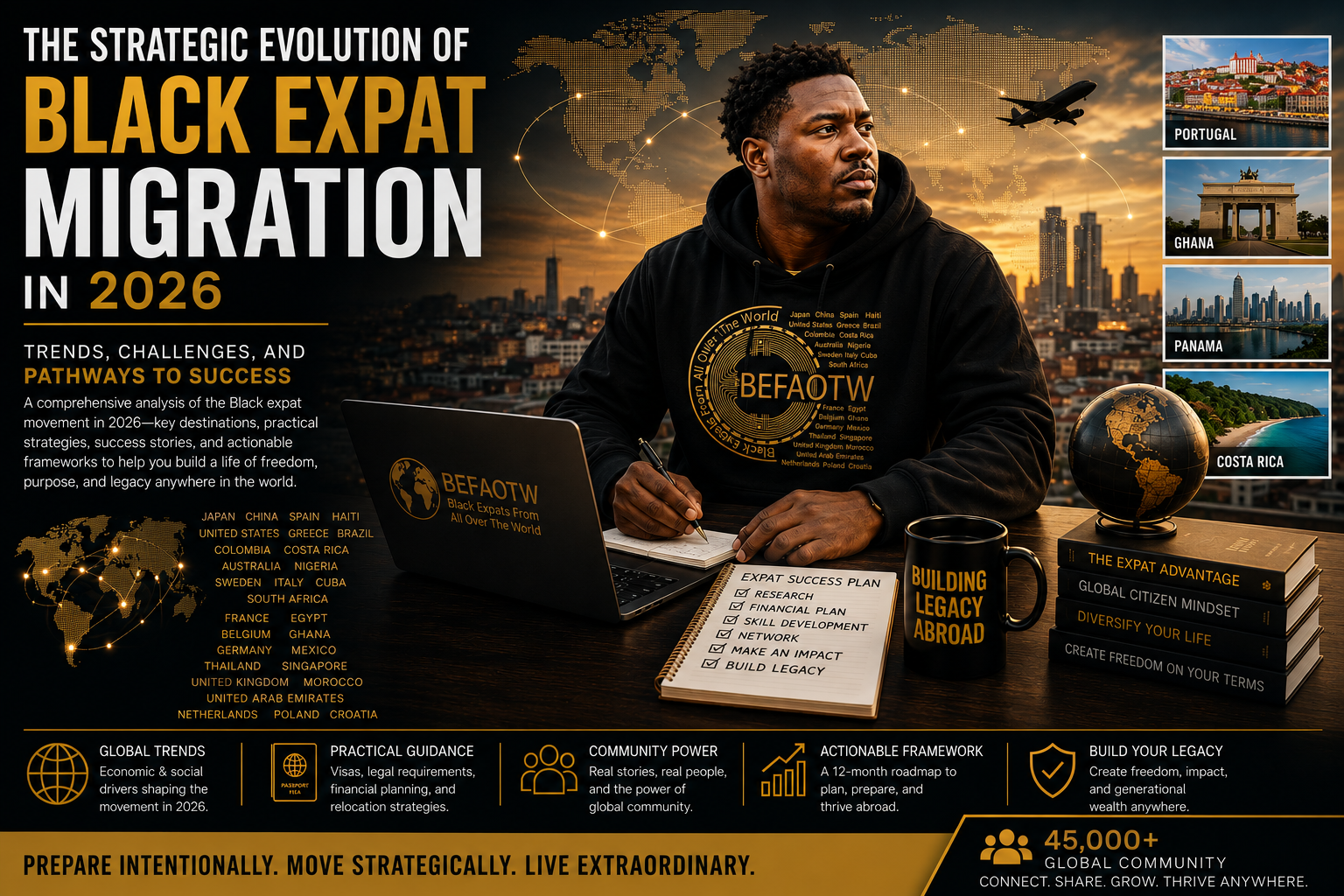
As 2026 continues to unfold, one thing is becoming increasingly clear: the world is not closing its doors to expatriates — it is redefining how those doors are opened.
For Black expats, digital nomads, and globally mobile professionals, the conversation is no longer just about where to move. It’s about how to move strategically in a world where governments are tightening systems while simultaneously competing for global talent.
This week, several key developments across Europe, Asia, and global travel policy highlight exactly where expatriation is heading next.
And more importantly — what it means for you.
1. Germany Is Quietly Setting the Standard for Skilled Migration
Germany is not just participating in the global race for talent — it is helping define it.
In 2026, the country continues to expand its structured immigration pathways, particularly through the EU Blue Card system, which now sets a general salary threshold at approximately €50,700, with a reduced threshold around €45,900 for high-demand professions.
On paper, this may look like just another visa requirement. But in reality, it signals something much bigger.
Germany is building a predictable, skills-based immigration pipeline — something many countries still struggle to offer.
At the same time, reforms tied to the Skilled Immigration Act are making it easier for:
- Degree holders to transition into the workforce
- Experienced professionals to qualify without traditional academic routes
- Foreign workers to enter sectors facing labor shortages
For Black expats, especially those coming from the United States, the UK, or Canada, this creates a rare level of clarity in a world where immigration is often confusing and inconsistent.
But there’s another layer to this.
Germany’s openness is not purely about opportunity — it’s about necessity.
With an aging population and labor shortages across multiple industries, the country needs foreign talent. And when countries need people, they tend to create systems that actually work.
That makes Germany one of the few places where policy, economics, and opportunity are aligned.
2. Smaller Countries Are Competing Harder Than Ever for Remote Workers
While major countries refine structured immigration, smaller nations are playing a different game — and in some cases, a more aggressive one.
Sri Lanka’s decision to officially launch its digital nomad visa in early 2026 is a perfect example.
This isn’t just about attracting tourists. It’s about attracting income without taking jobs away from locals.
Remote workers represent something every government wants:
- Foreign income entering the economy
- Increased spending on housing, food, and services
- No strain on the local job market
And Sri Lanka is not alone.
Across the world, countries in:
- Southeast Asia
- Latin America
- The Caribbean
- Eastern Europe
are all adjusting policies to attract the same demographic: location-independent earners.
For Black expats, this creates an entirely different level of opportunity.
Ten years ago, moving abroad often meant:
- Finding a job locally
- Navigating sponsorship systems
- Competing in foreign job markets
Now, many people are doing the opposite:
👉 They bring their income with them.
This shift is one of the biggest transformations in modern expatriation — and it is still in its early stages.
3. Remote Work Is Forcing Governments to Rewrite Tax Rules
If remote work created freedom, it also created confusion — especially when it comes to taxes.
That’s why developments like the updated Germany–Netherlands cross-border tax agreement matter more than most people realize.
Under new rules, workers can now spend up to 34 days working remotely from their home country without automatically shifting where their income is taxed.
This might sound like a small adjustment, but it represents a major shift in how governments are thinking.
For decades, work was tied to location.
Now, work is tied to:
- Contracts
- Residency status
- Tax agreements
- Days spent in specific countries
And governments are being forced to adapt in real time.
For expats, this creates both opportunity and responsibility.
You can:
- Live in one country
- Work for a company in another
- Travel between multiple countries
But if you don’t understand how tax residency works, you can also:
- Get double taxed
- Violate visa conditions
- Create legal complications without realizing it
The freedom is real — but so is the complexity.
4. Travel Is Becoming More Digital, More Controlled, and Less Flexible
One of the biggest mindset shifts expats need to make in 2026 is this:
👉 Travel is no longer as simple as it used to be.
The UK’s Electronic Travel Authorisation (ETA) system is a perfect example.
What used to be:
“Just book a flight and go”
Has now become:
“Get pre-approved digitally before you even travel”
And this is not just the UK.
Around the world, countries are introducing:
- Digital travel authorizations
- Pre-screening systems
- Biometric entry processes
- Data-based border controls
For expats, especially those who move frequently or travel often, this means one thing:
Spontaneity is being replaced by preparation.
Missing a requirement like an ETA doesn’t just delay your trip — it can stop it entirely.
The Bigger Trend: Expat Life Is Becoming More Strategic
When you step back and look at all of these developments together, a clear pattern emerges.
The world is not becoming less global.
It is becoming more structured.
More rules.
More systems.
More requirements.
But also — more opportunity.
For Black expats, this creates a powerful moment.
Because while many people are still thinking about living abroad as a dream, others are starting to approach it as a strategy.
And that difference matters.
What This Means for Black Expats Right Now
In 2026, the advantage no longer goes to the person who simply wants to move abroad.
It goes to the person who understands:
- Which countries align with their goals
- How visa systems actually work
- How to protect their income legally
- Where opportunity is growing — not just trending
The expat lifestyle is evolving.
It’s no longer just about:
🌴 Escaping
✈️ Traveling
🌍 Exploring
It’s about:
📊 Positioning
📍 Planning
💡 Leveraging global systems
Final Thought: This Is Just the Beginning
Everything happening right now — from Germany’s immigration policies to digital nomad visas to travel authorization systems — is part of a larger global shift.
A shift toward:
- Controlled mobility
- Competitive migration systems
- And a world where movement is still possible — but increasingly intentional
For Black expats, this is not a limitation.
It’s an opportunity.
Because the more complex the system becomes, the more valuable it is to understand it early.
And in 2026, the people who understand global mobility best won’t just live abroad.
They’ll build lives that work across borders.