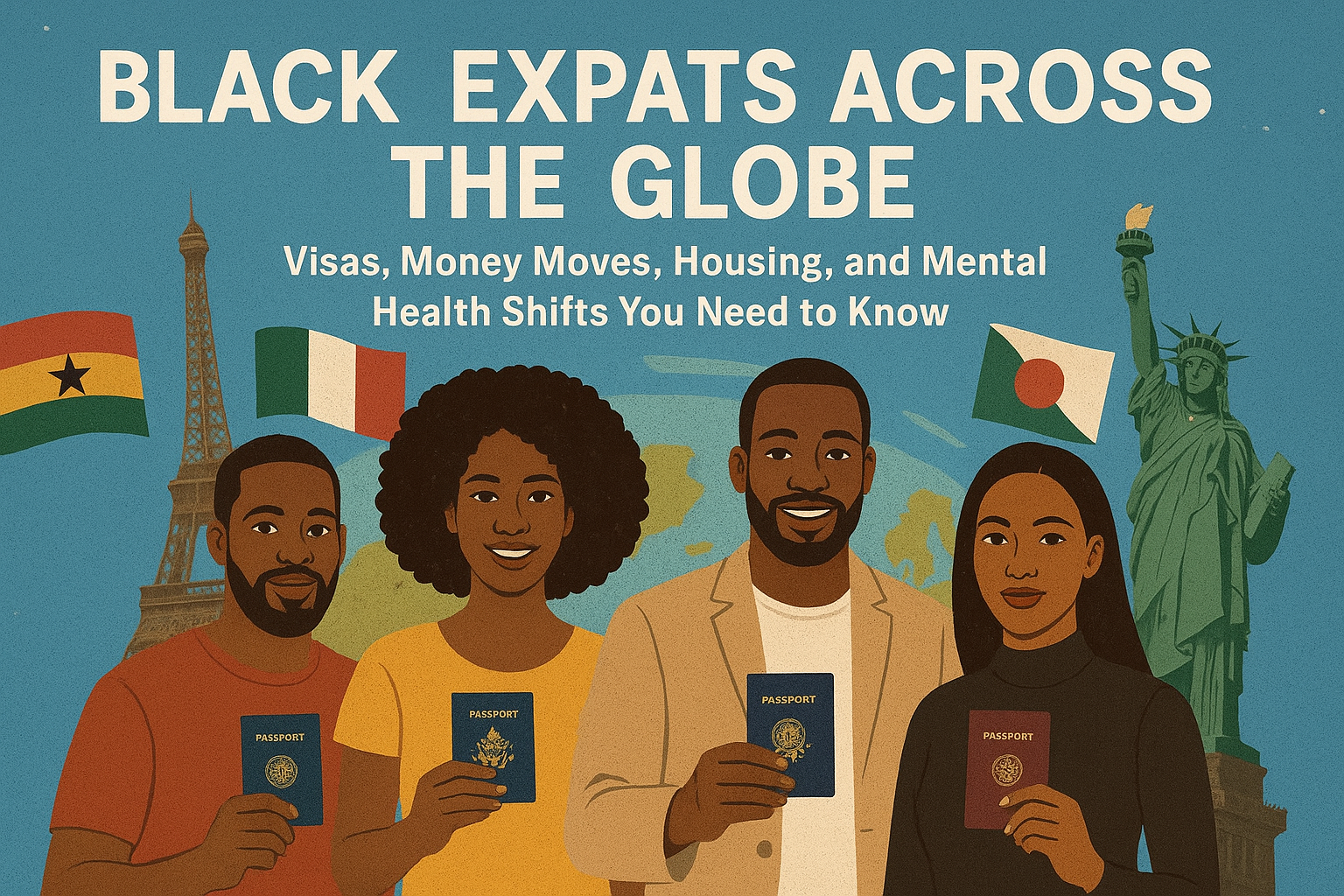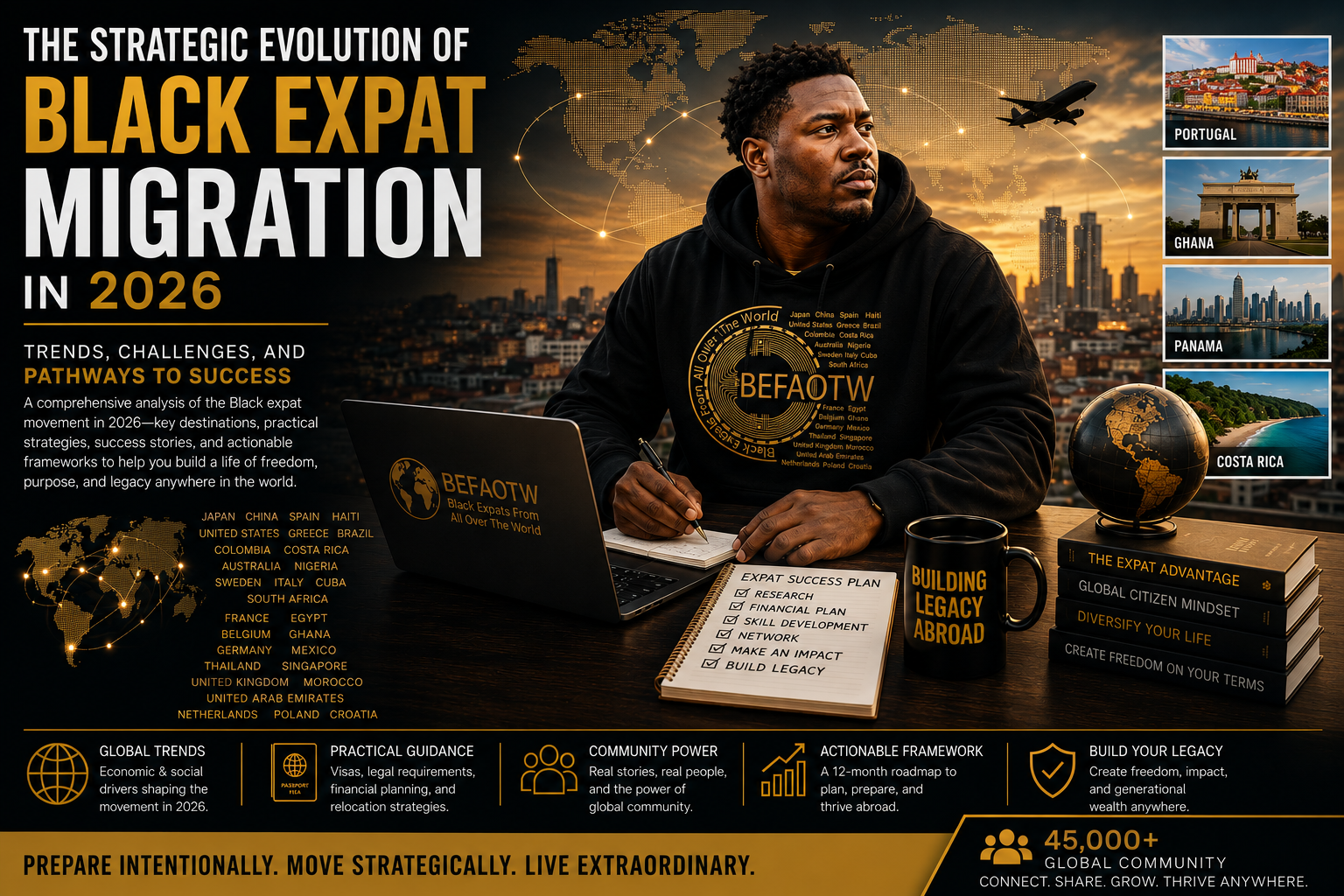
In 2026, the Black expat experience is no longer just about travel or temporary relocation. It has become a global movement rooted in intention, strategy, and self-determination. Across continents, Black professionals, entrepreneurs, creatives, families, and retirees are choosing to live abroad not simply to escape challenges at home, but to design lives that offer greater freedom, opportunity, and peace.
What was once considered unconventional is now becoming a deliberate lifestyle choice. The conversation has shifted from “Can I do this?” to “Where do I belong, and how do I build the life I want on a global scale?”
Africa’s Invitation to the Diaspora
One of the most significant developments shaping Black global mobility is the growing number of African nations formally welcoming the diaspora back.
In recent years, countries such as Ghana, Sierra Leone, and Benin have launched initiatives offering residency, investment pathways, and even citizenship to people of African descent. These programs are not only symbolic acts of reconnection but also practical opportunities for long-term settlement, business development, and cultural restoration.
For many in the diaspora, this represents a powerful shift. The idea of Africa is no longer limited to heritage tourism. It is increasingly viewed as a place to live, raise families, invest, and build legacy. The emotional impact of being welcomed “home” combined with real legal pathways has transformed how many Black people see their future on the continent.
Why More Black Professionals Are Going Global
Technology has removed borders from income. Remote work, digital entrepreneurship, consulting, and online education now allow people to earn in strong currencies while living in countries with lower costs of living and slower, healthier lifestyles.
For Black professionals, this has been life-changing. Instead of being confined to expensive cities with limited work-life balance, many are choosing locations that offer:
- Affordable housing
- Quality healthcare
- Walkable cities and reliable transportation
- Greater access to rest and personal time
- New cultural experiences
Equally important is the emotional aspect. Many Black expats describe feeling less racially burdened in daily interactions abroad. While racism exists worldwide, the social dynamics in some countries allow them to move through life without the same historical weight and constant vigilance they experienced at home.
Emerging Black Expat Destinations
In 2026, Black expats are creating communities across every region of the world.
In Africa, Ghana, Kenya, Rwanda, Senegal, and South Africa continue to attract those seeking cultural reconnection and entrepreneurial opportunity.
In Europe, Portugal, France, Germany, and the Netherlands offer residency pathways, strong infrastructure, and established Black populations.
In Latin America and the Caribbean, Mexico, Colombia, Brazil, Panama, and Jamaica provide warm climates, rich Afro-descendant culture, and growing digital nomad communities.
In Asia, Japan, Thailand, Vietnam, and South Korea remain popular for teaching, tech work, and creative careers, supported by expanding Black expat networks.
These locations are no longer just destinations; they are becoming long-term homes and hubs of Black global life.
Building Black Ecosystems Abroad
Perhaps the most powerful shift in the Black expat movement is the rise of Black-owned businesses and institutions overseas. From restaurants and cafés to real estate firms, wellness centers, media platforms, tour companies, and consulting agencies, Black expats are not just relocating — they are building economies.
These ecosystems provide more than services. They offer community, mentorship, employment, and cultural affirmation. They create spaces where newcomers can find guidance, familiarity, and support, making the transition abroad smoother and more sustainable.
Families, Children, and Global Legacy
More Black families are choosing to raise children internationally. Multilingual education, exposure to diverse cultures, and global citizenship opportunities are shaping a generation that sees the world as accessible rather than distant.
Parents are intentionally giving their children broader perspectives, cultural confidence, and adaptability. These globally raised children are growing up with a sense that they belong everywhere and that their future is not limited by geography.
The Inner Transformation
Living abroad is not only a physical relocation; it is a personal evolution. It requires patience, humility, resilience, and growth. Many Black expats describe becoming more self-aware, disciplined, and emotionally grounded through their experiences.
Distance from familiar systems often brings clarity. It deepens understanding of identity, purpose, and what truly matters. It teaches how to adapt without losing oneself and how to build home wherever one chooses to plant roots.
A Movement Defined by Choice
The Black global mobility movement of 2026 is defined by agency. It is no longer driven solely by necessity or escape but by vision and self-direction. People are choosing environments that support their mental health, financial goals, family life, and long-term dreams.
This is not about abandoning one’s roots. It is about extending them across borders.
As more Black people claim space around the world, they are reshaping what success, safety, and belonging look like. The world is no longer something to merely visit. It is a place to live fully, intentionally, and with purpose.
The future of the Black expat community is global, connected, and powerful — and its story is only beginning.